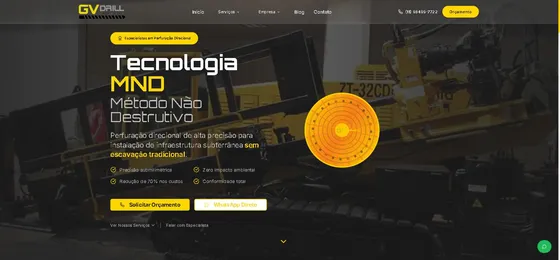
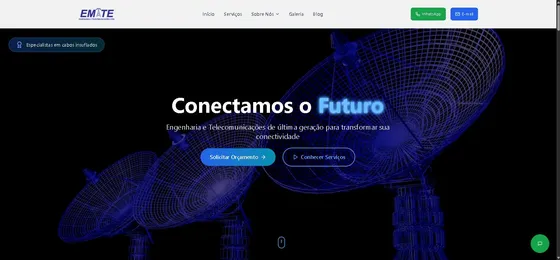
Industrial website that generates quote requests: checklist
An industrial website generates quote requests when it answers three buyer questions on the first screens: can you make my part, have you done it before, and how do I get a price. That means capability pages in the buyer's language, an RFQ form that accepts drawings on every page, fast mobile load times, technical SEO and conversion tracking.
Guilherme Rodrigues ItinoseUpdated 7 min read
Key takeaways
- Write capability pages around processes, materials, sizes and tolerances, not slogans.
- Put a quote request with drawing upload on every page, not only on Contact.
- Speed matters: buyers often open your link on a phone between meetings.
- One page per service and per industry gives Google something specific to rank.
- Track form submissions and calls as conversions, or you cannot tell what works.
Most industrial websites were built as an online brochure: a hero photo of the plant, a slogan about quality and a contact page. They look fine and bring almost nothing, because the person who visits is not browsing. An engineer or buyer arrives with a part in mind and a short list of suppliers to check. If your site does not answer their questions in a minute, they move to the next tab.
This checklist is what we use when we build or review a website for a manufacturer.
What does a buyer look for first?
Buyers evaluating a new supplier check the same three things, almost always in this order:
- Can you make it? Processes, materials, part size envelope, tolerances, certifications you actually hold.
- Have you done it before? Industries served and real examples you are allowed to show.
- How do I get a price? A quote request that is obvious, fast and accepts a drawing.
A website that answers those questions on its first screens gets RFQs. One that opens with a slogan and a stock photo gets a bounce.
| Buyer question | Where the site should answer it |
|---|---|
| Can you make it? | Capability pages: machine list, materials, envelope, tolerances |
| Have you done it before? | Industry pages and cases with real parts or projects |
| How do I get a price? | RFQ form with drawing upload on every page |
| Can I trust you? | Certifications, address, team, response time |
What should a capability page include?
A capability page is the industrial equivalent of a product page. It should read like a capable shop wrote it, not an agency. Include:
- The process in plain terms: CNC turning, 5-axis milling, laser cutting, welding, injection molding.
- Size envelope and limits: maximum diameter and length, sheet size and thickness, press tonnage.
- Materials you run regularly, and the ones you can source on request.
- Typical tolerances and finishes, stated honestly. If a tolerance needs grinding or inspection, say so.
- Quantities: prototypes, small batches, series.
- Photos of real parts, without exposing customer drawings or logos.
- A quote request at the end of the page and in the header.
One page per process works better than one long “Services” page, because each page can rank for its own search (for example “5-axis machining” plus your region) and the buyer lands straight on the relevant content.
Why should every page have a quote request?
Because buyers do not land on your home page. They land on whatever page Google sent them to, often a capability or industry page. If the next step is two clicks away, many will not take it.
A good RFQ form for manufacturing:
- Accepts PDF, STEP and DXF, and offers a link field for large files.
- Asks only what you need to quote: material, quantity, required date, contact.
- Shows when you will reply (for example “within 1 business day”).
- Sends a copy to the buyer and routes the request to whoever quotes, not a generic inbox.
In Brazil and Latin America, a WhatsApp button next to the form also works well, because many buyers prefer to start there.
How fast does an industrial website need to be?
Fast enough that it feels instant on a phone. Buyers often open your link from an email between meetings, on mobile data. Google’s Core Web Vitals give a useful target: Largest Contentful Paint (when the main content appears) within 2.5 seconds, good responsiveness to taps (INP) and no layout jumps (CLS).
In practice that means:
- Static or pre-rendered pages instead of heavy page builders.
- Images resized and served in modern formats (WebP or AVIF).
- No sliders, autoplay videos above the fold or ten tracking scripts.
- Fonts limited to one or two families, loaded efficiently.
What technical SEO does a manufacturer’s site need?
Technical SEO is what lets Google find, understand and trust your pages. The essentials:
| Item | What it does |
|---|---|
| Unique title and description per page | Tells Google and the searcher what the page is about |
| One H1 and logical headings | Structures the content for readers and crawlers |
| XML sitemap submitted in Search Console | Lists every page you want indexed |
| Clean URLs and redirects for old pages | Keeps the authority old pages had |
| Structured data (Organization, Service, FAQ, Breadcrumb) | Helps Google understand who you are and what you offer |
| hreflang, if you serve several languages | Shows the right language version to each searcher |
| Google Business Profile | Puts your plant on Maps and local results |
None of this is optional for a site that is supposed to bring leads. It is also cheap to get right at launch and expensive to fix later.
How do you measure whether the website works?
Set up conversions on day one. Count each quote request, each WhatsApp click and each call from the site as a conversion in your analytics tool. Then look at a simple monthly table: visits by page, conversions by page and where the visits came from (search, ads, email, direct).
Without that, every discussion about the website is opinion. With it, you know which capability pages bring requests and which industries are worth a new page. If you also run ads, the same tracking tells you the cost per lead of each campaign; see our guide to Google Ads for B2B.
What content brings visits over time?
Capability and industry pages capture people who already know what they need. Articles capture people earlier, while they research: how to prepare a DXF, which tolerance to specify, when to choose 3D printing over machining. A few strong articles that answer real buyer questions, linked to the matching service page, keep bringing visits for years.
If you have many products, a digital catalog with one page per product does the same job at scale: every product becomes a way in from search.
A launch checklist
Before going live, check:
- Every page has a unique title, description and one H1.
- The RFQ form works on mobile and accepts drawings.
- Old URLs redirect (301) to their new equivalents.
- The XML sitemap is live and submitted in Google Search Console.
- Conversions are tracked for forms, calls and WhatsApp.
- Google Business Profile has the right address, hours and website link.
- Pages load fast on a mid-range phone over mobile data.
- The domain and hosting are in your company’s name.
A website built this way is not a brochure. It is a sales channel that works while your team is at the machines.
When to outsource this
- Your current site was built as a brochure and nobody can say how many RFQs it brings
- You lack in-house time to write technical copy and set up SEO and tracking
When not to
- You need a full online store with cart, shipping and payment; that is a different project
FAQ
How many pages does an industrial website need?
Enough to give each service and each key industry its own page. For most machine shops and manufacturers that means 10 to 25 pages: home, one page per process, a few industry pages, cases, about and contact.
Should we publish prices?
Usually not for custom work, because price depends on the drawing. Publish what drives price instead (materials, quantities, lead times) and make the quote request easy.
Is a contact form enough, or do we need drawing upload?
Drawing upload removes a whole email round-trip. Accept PDF, STEP and DXF, and offer a link field for files larger than your upload limit.
How long until the site brings leads from Google?
Pages are usually indexed within days to weeks after launch and sitemap submission. Ranking for competitive terms takes longer and depends on content quality, links and competition, so measure month over month.
Who should own the domain and hosting?
You. The domain, hosting account and code should be in your company's name, with the agency given access, so you never depend on one supplier.
Sources
- Google Search Central: SEO Starter Guide (accessed October 9, 2026)
- web.dev: Web Vitals (accessed October 9, 2026)
- Google Business Profile: guidelines for representing your business (accessed October 9, 2026)
Let's talk about your project
Tell us what you need. We reply within 1 business day with next steps and a fixed-price proposal.