B2B marketing plan for manufacturers: a 7-step guide
A B2B marketing plan for a manufacturer defines the ideal customer, why they should choose you, which channels you'll show up in, what content you'll publish, how much you'll invest and how you'll measure. Industrial buying is long and technical, so the plan should prioritize being found in search, proving capability with real cases and handing qualified leads to sales.
This guide teaches the full method. If you'd rather start from a ready-made tool, we show the Industrial content kit at the end. See the ready-made tool
Guilherme Rodrigues ItinoseUpdated 7 min read
Key takeaways
- Start with the ideal customer and the buying committee, not the channels.
- In manufacturing, being found on Google at the moment of need beats reach.
- Real cases, shop floor photos and technical data persuade more than slogans.
- Set a customer target and work the funnel backwards.
- Measure qualified leads and proposals, not likes.
Most small and mid-sized manufacturers grow through referrals. That works for a while, until a big customer cuts orders and the company realizes it has no predictable way to win new ones. That’s when marketing stops being “posting on social media” and becomes a plan.
This article shows how to build a B2B marketing plan for a manufacturer in seven steps, organized as a technical study: the problem, how industrial buyers buy, the steps of the plan, a funnel worked out with fictitious numbers, a 90-day calendar and the most common mistakes.
Introduction: referrals are not a strategy
Referrals are great, but they have three limits: you can’t control volume, you can’t choose the type of customer, and they dry up when the market cools. A marketing plan doesn’t replace referrals; it builds a second engine you control.
Background: how manufacturers buy
Industrial buying differs from retail buying in four ways:
- Buying committee: engineering sets the requirement, purchasing negotiates, quality approves the supplier, management signs. Each wants different information.
- Long cycle: weeks or months can pass between first contact and order, with quoting, samples and supplier approval.
- Active search: buyers search when they have a concrete need. They use Google, compare websites and request quotes from three or four suppliers.
- Risk: switching suppliers and getting it wrong is expensive. So proof of capability weighs more than price at first contact.
The practical consequence: industrial marketing must be present at the moment of search, prove technical capability and make requesting a quote easy.
The 7 steps of the plan
1. Diagnosis
Before planning, understand where current customers come from. List your last 20 new customers and answer: how did they find you, what sector, what deal size, how long did it take? Review the website, Google Business Profile and social channels too. Often the diagnosis already shows the problem: a website with no technical information, no quote form or no case studies.
2. Ideal customer and buying committee
Define the ideal customer with concrete criteria: sector, size, region, type of part or service, typical volume. Then map the committee: who decides, who influences, what each needs to see. An engineer wants capability and tolerances; a buyer wants lead time, price and reliability.
3. Positioning and proof
Answer in one sentence: why should an ideal customer choose you? “Quality and commitment” doesn’t set anyone apart. “Precision machined parts in batches of 10 to 500, shipped in 10 working days with a dimensional report” does.
Gather proof: customer cases (with permission), real photos of the plant and machines, certifications, equipment capacity and typical tolerances.
4. Channels
| Channel | Main role | Time to results |
|---|---|---|
| Website | Turn visitors into quote requests | Foundation for everything else |
| Google Ads (search) | Show up at the moment of search | Weeks |
| SEO and content | Get found without paying per click | 3 to 6 months |
| Google Business Profile | Local search and reputation | Weeks to months |
| Reach buyers and engineers | Months | |
| Show plant, process and team | Months | |
| Email and messaging | Follow up quotes and past customers | Immediate |
| Trade shows and reps | Relationships in specific sectors | Varies |
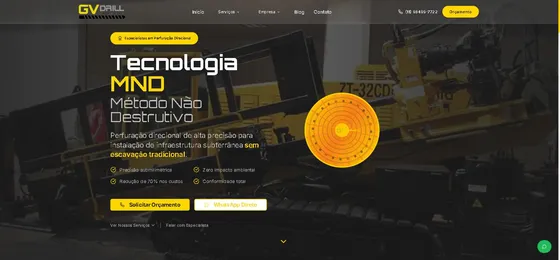
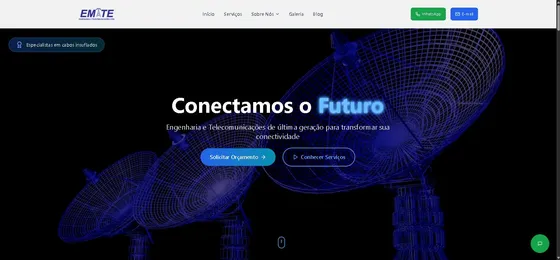
The website is the hub; every channel points to it. An industrial website that generates quote requests needs capabilities, cases, industries served and a simple form.
5. Content
Organize content by goal, not by format:
- Teach: articles and videos answering buyers’ technical questions
- Show: process, machines, team, behind the scenes
- Prove: cases, delivery figures, certifications, real testimonials
- Call: a clear invitation to request a quote or send a drawing
A realistic routine for a small company: two or three social posts a week and one technical article a month. Consistency beats volume. For how to split roles between networks, see LinkedIn and Instagram for industrial companies.
6. Budget and resources
Budget splits into three parts: media (ads), production (website, photos, video, copy) and people (in-house or agency). Rather than picking an arbitrary number, calculate budget from the funnel, as in the example below, and review it monthly against cost per qualified lead.
7. Metrics and funnel
The metrics that matter are the ones closest to the sale:
- Leads received (form, phone, messaging)
- Qualified leads (matching the ideal customer profile)
- Proposals sent
- Orders won and value
- Cost per qualified lead and per customer
Likes and followers help you understand content, but they don’t pay bills.
Example: working the funnel backwards
A fictitious machine shop with an average first-year value of $6,000 per new customer and a target of 4 new customers a month.
| Stage | Conversion rate | Quantity needed |
|---|---|---|
| Customers won | — | 4 |
| Proposals sent | 25% become orders | 16 |
| Qualified leads | 50% get a proposal | 32 |
| Leads received | 40% are qualified | 80 |
At an average of $40 per lead from search ads, that’s roughly $3,200 a month in media for 80 leads, with potential return of $24,000 in new orders that month, before counting repeat business. Rates and costs vary widely by sector and region; the value is in the method. After three months of real data, replace the assumptions with your own numbers.
Note that improving any stage cuts the budget needed. If qualification rises from 40% to 50%, 64 leads are enough. That’s why a good website and fast quote replies matter as much as ads.
90-day calendar
- Days 1 to 30: diagnosis, ideal customer and positioning, website fixes (capabilities, cases, form) and Google Business Profile.
- Days 31 to 60: Google search campaign for your main services, start the content routine and log every lead in a spreadsheet or CRM.
- Days 61 to 90: first funnel report, keyword and ad adjustments, first technical article and first published case.
For the ads side, Google Ads for qualified B2B leads details structure and keywords.
Common mistakes
Starting with channels
“We need to be on TikTok” before knowing who the customer is. Channels without strategy burn time and money.
Copying retail
Promotions, giveaways and consumer language put off technical buyers. Manufacturers sell trust and capability.
A website with no technical information
Industrial buyers want machines, materials, tolerances, batch sizes and industries. A site with only “mission, vision and values” won’t generate quotes.
Measuring likes
Followers aren’t customers. Measure qualified leads, proposals and orders.
Slow replies
A quote request answered in three days loses to the competitor who replied in three hours. Marketing and sales must work together.
Conclusion
A manufacturer’s marketing plan doesn’t need to be complex. It starts from the ideal customer and buying committee, defines positioning backed by real proof, picks a few channels with clear roles, keeps a content routine you can sustain and measures what’s closest to the sale.
The example showed how a target of four customers a month becomes a funnel with concrete numbers and a calculated budget instead of a guess. If you lack the team to execute, Downway runs social media and paid ads for manufacturers, with reporting focused on leads and proposals.
When to outsource this
- You don't have a team to keep website, ads and social media running consistently
- You already spend on marketing but don't know which channels bring quote requests
When not to
- Your order book is full, capacity is maxed and you can't take new customers
FAQ
Does marketing work for manufacturers?
Yes, when it's adapted to technical buying: a website with complete information, search presence, real cases and fast replies to quote requests. It doesn't work when it copies retail tactics.
How much should a manufacturer spend on marketing?
There's no single number. Many companies start with a monthly ad budget of a few thousand dollars and adjust based on cost per qualified lead. The plan should start from the customer target and the funnel.
LinkedIn or Instagram for manufacturers?
LinkedIn tends to be better for reaching buyers and engineers. Instagram works for showing the plant, process and team, reinforcing trust with people who already know you. Many manufacturers use both with different roles.
How long until marketing delivers results?
Search ads can generate leads within weeks. SEO and content usually take three to six months to gain traction. That's why the plan combines both.
Sources
- Google Search Central — SEO Starter Guide (accessed November 16, 2026)
- Business-to-business (Wikipedia) (accessed November 16, 2026)
- Marketing plan (Wikipedia) (accessed November 16, 2026)
- Sales process (Wikipedia) (accessed November 16, 2026)
Let's talk about your project
Tell us what you need. We reply within 1 business day with next steps and a fixed-price proposal.